
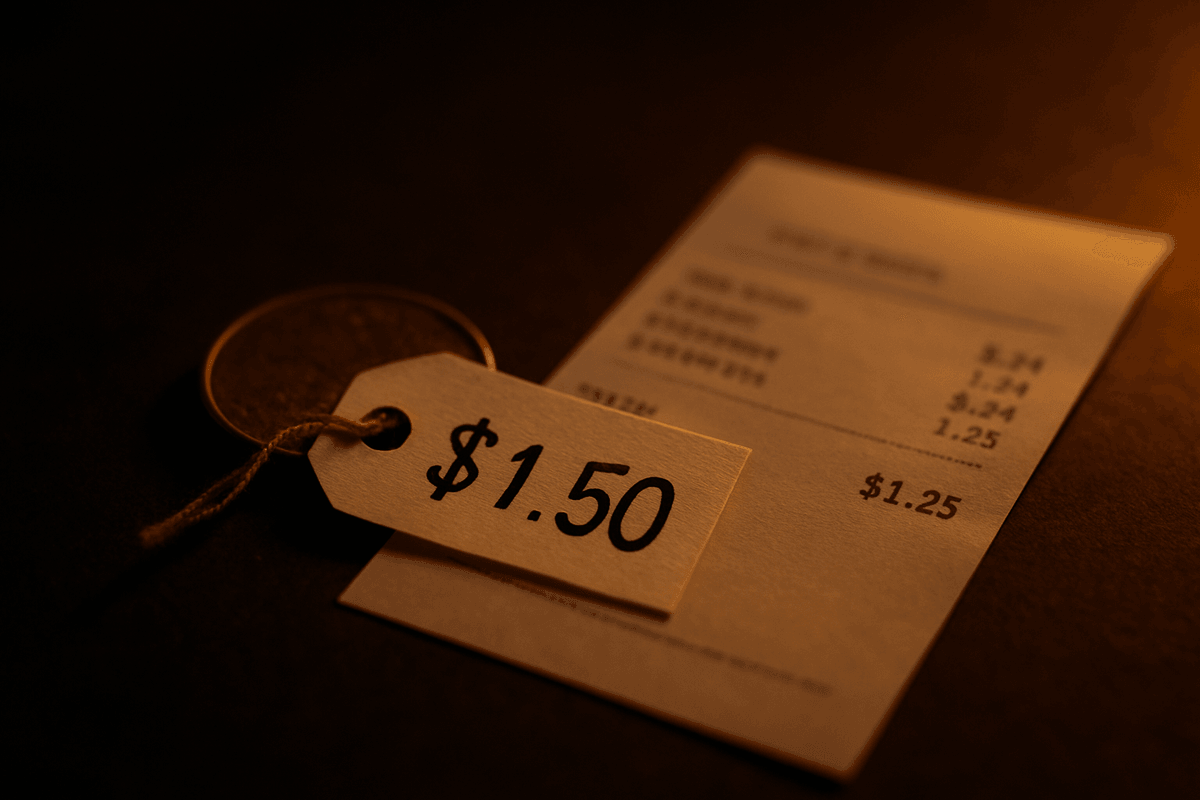
An Asking Price Is an Opinion, Not a Comp
Here's a sentence that sounds obvious and gets ignored every single day: a listed price is not a sold price. When a dealer puts $200 on a coin, or a seller lists it on eBay or Whatnot at $200, that number is a hope — a claim about what the seller thinks the coin is worth. It has not been validated by a single buyer yet.
A comparable sale — a "comp" — only happens when a buyer and a seller agree on a price and money changes hands. That's the difference between an opinion and a fact. And if you're pricing your own coins, you should be building on facts.
Why People Lean on Asking Prices Anyway
The temptation to use asking prices as comps is real, and it comes from a few places. Asking prices are easy to find — they're sitting right there in the case or the listing, no digging required. They also tend to run higher than sold prices, because every seller prices in a little room to negotiate. And human nature being what it is, the higher number is the one that makes your coin feel more valuable.
But all three of those reasons are about comfort, not accuracy. The asking price you can see in five seconds is not a better number — it's just a more convenient one. And a market where everyone prices off the highest asking price they can find is a market running on self-reinforcing optimism.
What a Real Comp Looks Like
A real comp is a coin of the same type, in the same condition, that actually sold, recently, through a channel you can see. Auction results, confirmed eBay sold listings, and dealer transactions you can verify — those are the raw material of honest pricing. The further a number gets from an actual sale, the softer it is.
This is also why the honest tools show their work. A dealer-buy number tells you the floor you can actually get — what a buyer on the other side of the table will really pay, not what someone hopes it's worth at retail. A confidence score tells you how much real, recent, sold data is backing that number up. Thin data is a signal, not a failure: it means you're looking at a coin with few comps, and you should price accordingly.
The Practical Rule
Here's the rule to keep in your pocket: when in doubt, price off sold comps, not asking prices. If you can't find a sold comp for the exact coin in front of you, find the nearest thing that did sell and work from there — and be honest with yourself (and your buyer) about the gap.
None of this means asking prices are useless. They tell you where the market is trying to go, and they can be a useful sanity check on the retail side. But they are a starting point for negotiation, not a finish line for valuation. The finish line is the sale — and until a sale happens, you're dealing in opinions.
So the next time someone waves a listing at you as proof of value, ask the one question that matters: did it sell for that? Because a coin listed for $200 is just a coin with a $200 sticker. A coin that sold for $200 is a $200 coin.
Price off what sold, not what's listed
Search any US coin on LastSoldCoin. FloorBid gives you the dealer-buy number, BidScore tells you how much sold data backs it — so your price is built on sales, not stickers.
Search a Coin →