
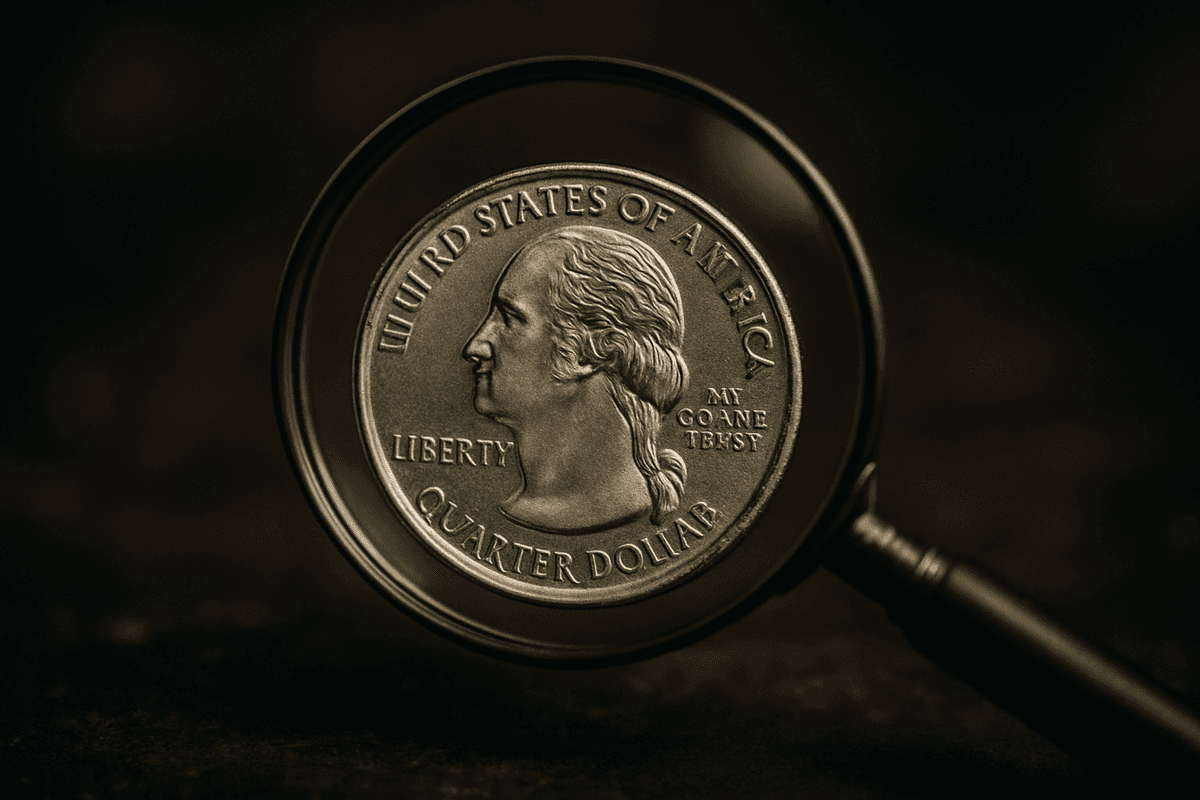
The Fakes Were Always Coming
Numismatic News reported this month that counterfeit and altered 2026 Semiquincentennial quarters are surfacing online as demand for the 250th-anniversary coinage heats up. Nobody in the hobby should be surprised. This is what always happens: enthusiasm spikes, prices rise, and the counterfeiters show up about ten minutes later.
So let's not waste the moment hand-wringing about the fakes. Counterfeits are as old as coinage itself, and they aren't going anywhere. The question worth asking is different: who actually gets hurt, and why? Because it's rarely the person who did the most elaborate inspection. It's the person who got overconfident.
Overconfidence Is the Real Counterfeit
Here's the uncomfortable truth about most bad coin deals: they don't happen because someone was tricked by a master forger. They happen because someone was sure — sure the coin was real, sure the grade was right, sure the price was fair — and didn't check. The fake is just the excuse; the overconfidence is the actual mechanism.
On a live stream, overconfidence spreads fast. One confident voice says "these are all going to moon," and the room starts bidding on vibes instead of evidence. A seller who can't show their work — no comps, no grade, no data — is asking buyers to take their confidence on faith. And when the counterfeit shows up, it's the faith-based buyers who get burned.
Authentication Answers One Question. It Isn't the Price.
A lot of the conversation around fakes lands on authentication — and authentication is genuinely valuable. It answers a real question: is this coin genuine? But it doesn't answer the question most buyers and sellers actually need answered on a stream: what is this coin worth, and how confident am I in that number?
A coin can be 100% authentic and still be wildly mispriced. Value comes from comparable sales, condition, and demand — not from a certificate. The two tools complement each other, but they are not interchangeable. Confusing them is how a "genuine" coin gets sold at a fantasy price to someone who thinks the certificate did the pricing for them.
Show Your Work, or Don't Expect the Bid
The countermeasure to all of this isn't paranoia. It's transparency. When you price a coin, show the comps. Show the confidence level — how much real market data actually backs your number. If the data is deep, say so. If it's thin, say that too. A seller who admits "this one's a little thin on comps, so I'm pricing it cautiously" is more trustworthy than one who pretends every number is gospel.
This is the part that scales. You can't personally inspect every coin in a hot market, and you can't make every buyer an expert grader in one stream. But you can make your process visible. You can make your data visible. You can make your confidence visible. That's the difference between asking for trust and earning it — and in a market full of fakes, earning it is the only kind that lasts.
The Takeaway
The counterfeiters will keep making fakes, and hot markets will keep drawing them. That's not going to change. What changes is whether you get burned — and that comes down to one habit: treat confidence as something you show, not something you feel. Check the coin. Pull the comps. State the confidence. And when the next fake surfaces, let it be a reminder that the currency that matters most on a stream isn't the coin — it's trust.
Show your work on every coin
Search any US coin on LastSoldCoin. FloorBid gives you the dealer-buy number, BidScore tells you how much data backs it — so your confidence is something you can show, not just feel.
Search a Coin →